
During the summer of 1978, I was fortunate to have had the opportunity to view the exhibit, Treasures of Tutankhamun at the Los Angeles County Museum of Art. “Tut Fever” had been sweeping the country since the King Tut tour began on November 17, 1976, at Washington D.C.’s National Gallery of Art. Five additional cities hosted the tour—Chicago, New Orleans, Seattle, New York City, and San Francisco—so seeing the treasures was limited. While I don’t remember the exhibit in its entirety, I do recall in detail the piece that came to symbolize the entire show—the golden death mask of King Tut. Seeing that in person took my breath away. I still have an original poster of the mask on one of my hallway walls.
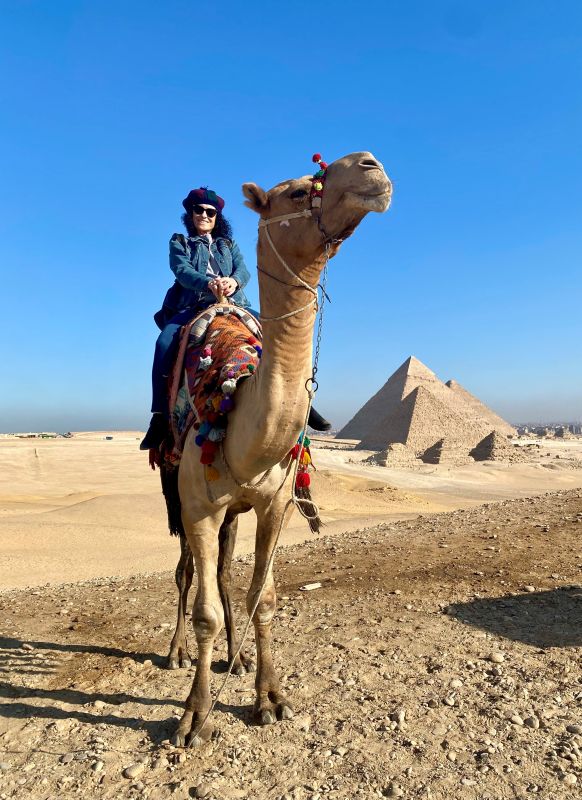
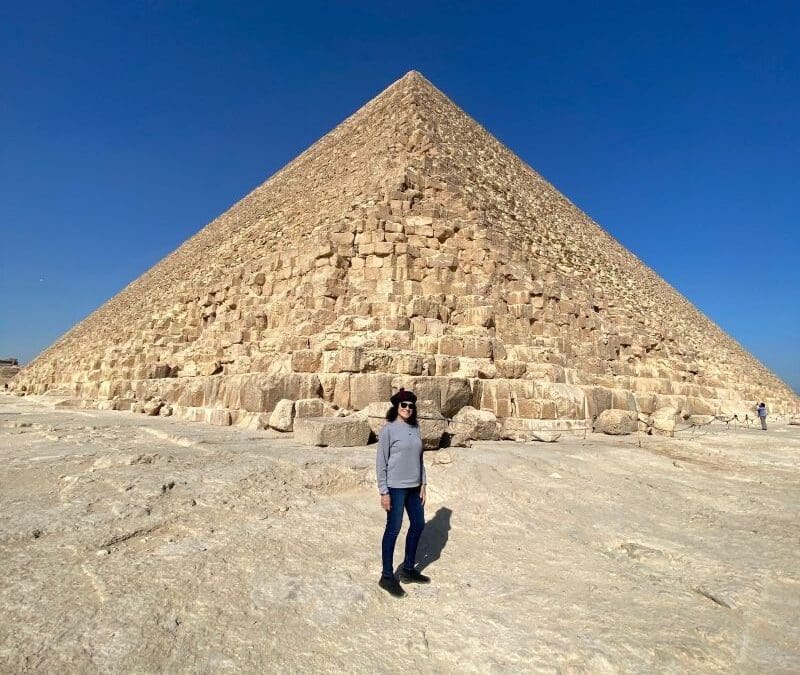
Always desiring to see Ancient Egyptian artifacts at the source, I finally fulfilled that wish this past month. It turned out to be a three-month delayed annual solo birthday trip lasting just under two weeks. I returned on January 29, and I think I am just now fully recovered from jetlag!
While the pyramids in Giza—just outside of Cairo—and the artifacts found in King Tutankhamun’s tomb in the Valley of the Kings were in the forefront of my mind, I quickly learned all sorts of ancient artifacts have been—and continue to be—discovered along the Nile River, all the way down to Egypt’s border with Sudan. In fact, without current borders to delineate modern African countries, Ancient Egyptian kingdoms extended far into Sudan. Relics in Sudan are from the Kingdom of Kush (2,400BC – 350 AD) and include more than 220 Nubian pyramids (steeper and smaller than the ones in Egypt), 25th Dynasty jewelry, and colossal statues of Napatan kings. Amazingly, more than 6 million artifacts have been discovered in northern Sudan.
Indeed, according to my Aswan guide, Mohamed Saeed, a mere 50 percent of Ancient Egyptian artifacts have been discovered thus far. With the help of UNESCO and the tireless work of internationally renowned archeologists like Poland’s Kazimierz Michalowski, new artifacts are being discovered regularly.
To say I was overwhelmed with information offered by both Mohamed and my first guide, Ahmed in Cairo and Alexandria, would be a gross understatement. Like others, I had learned about Ancient Egypt in school, but, other than King Tut, I could name only a handful of Pharaohs and Egyptian gods off the top of my head. Ra, Ramses, Osiris, Isis, Horus, Cleopatra and Nefertiti are a few of the ones I remember. I don’t recall ever learning about Sobek, the deity with a crocodile’s head and associated with the Nile, fertility, and pharaonic power. Or Tawaret, the goddess of childbirth, fertility, and protection, who was depicted as an upright, pregnant hippopotamus with human breasts, lion paws, and a crocodile tail. Clearly the ancient Egyptians believed that usurping the perceived and real powers of predatory animals would afford them supernatural supremacy.
Abu Simbel and the Afterlife Focus
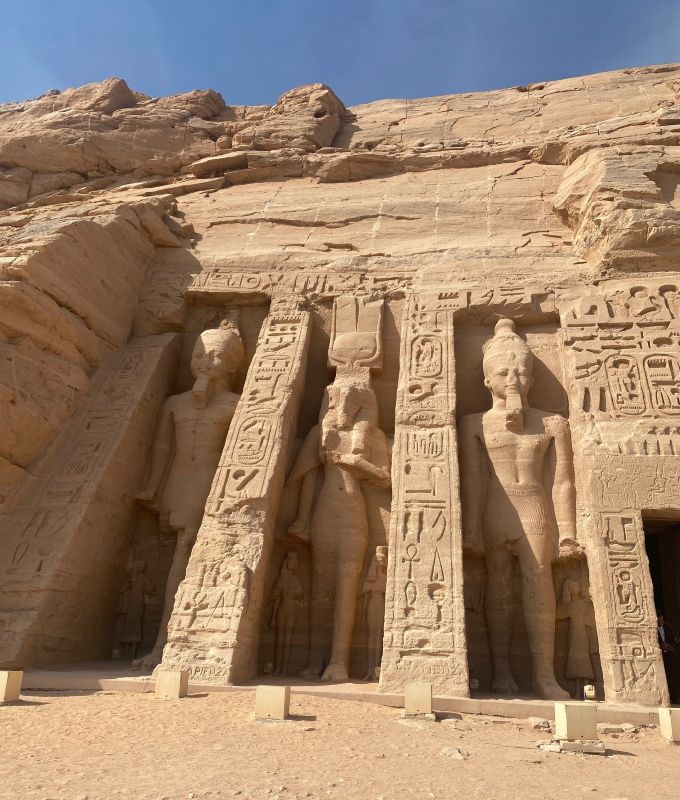
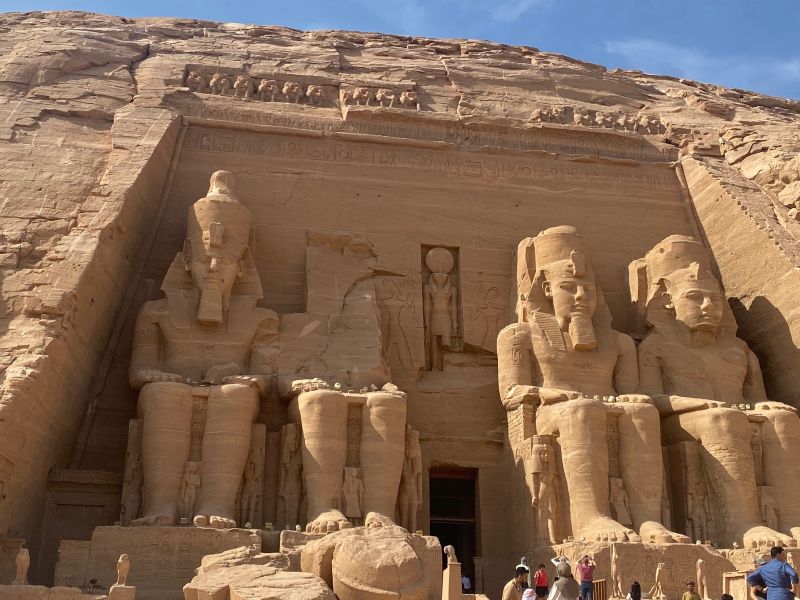
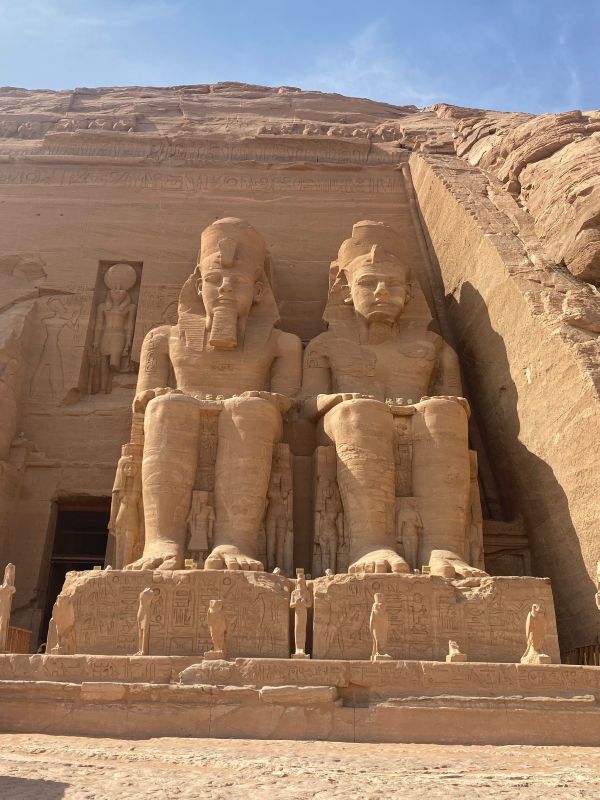
After three days in Cairo, I flew to Aswan, where I would embark on a Nile Cruise. But before I was taken to the boat, my new guide, Mohamed whisked me away on a three-hour drive south to Abu Simbel, located on the western bank of Lake Nasser near the Sudan border. Abu Simbel is a magnificent colossal historic site. Its two massive rock-cut temples were originally carved out of the mountainside in the 13th century BC, during the 19th Dynasty reign of the Pharaoh Ramesses II. Huge figures of Ramesses II tower over his wife, Nefertari and his children in smaller statues by his feet. Sculptures inside the Great Temple commemorate Ramesses II’s heroic leadership at the Battle of Kadesh. The whole complex was re-discovered in 1815 near its new location, broken down and removed in 1966, reassembled and relocated in its entirety in 1968 to higher ground to avoid it being submerged by Lake Nasser and the Aswan Dam reservoir.
As enthralling as this was to see, the single most captivating piece of information I learned from Mohamed was that the Ancient Egyptians concept of and preoccupation with the afterlife influenced all the three Abrahamic religions—Judaism, Christianity and Islam. The Egyptians viewed death as a significant transition rather than an end, with the afterlife representing an opportunity for rebirth and eternal happiness. These beliefs about life and death were based on their religious texts. To successfully reach the afterlife, a person must have led a moral life that strictly adhered to the Egyptian religion. They also had to believe in the underworld, eternal life, and the rebirth of the soul, which separated from the body and could navigate the underworld after death.
Most often, the Ancient Egyptians buried their dead with whatever they thought they would need on their journey to the next world. Because the journey was dangerous, burial tombs often included weapons. They also contained food and drinks, funerary texts, jewelry, and, in some cases, artwork and furniture. Six chariots were discovered in King Tut’s tomb.
Female Pharaoh
I am still digesting all I saw and learned, reading historical accounts online and planning to order specific books on various key figures like Hatshepsut(1505–1458 BC). Pharaoh Hatshepsut—the second Egyptian woman to rule in her own right—was unique and clearly ahead of her time in that she chose to depict herself in male attire and with masculine features in many of her statues. She strategically emphasized her authority as pharaoh in a male-dominated society, legitimizing her rule and asserting her power. She was also one of the most prolific builders in Ancient Egypt, overseeing large-scale construction projects like the Karnak Temple Complex, one of my favorite places near Luxor.
Stay tuned next month as I recount more of my adventures through fascinating Egypt.